What BPM Is Dubstep? A Guide for DJs & Producers

January 20, 2026
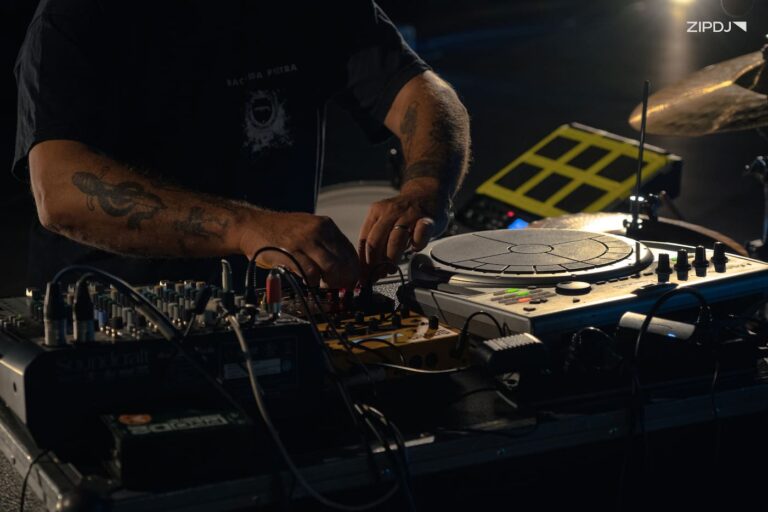
Dubstep’s blend of heavy drops and dominant sub-bass makes it a go-to genre for club DJs, with its groove defined by tempo.
While often associated with slower tempos, dubstep typically runs around 140 BPM, leaving room for syncopated rhythms.
This guide breaks down dubstep BPM ranges and how it uses half-time rhythms to deliver energetic electronic dance music.

What Is Dubstep BPM?
Dubstep BPM typically sits at 140 Beats Per Minute, often referred to simply as “140” within DJ and producer communities.
Dubstep BPM Structure & Features
Dubstep is an electronic music genre with a standard tempo of 140 BPM, compatible with genres like UK Garage and Grime.
Since its emergence in the early 2000s, the 140 BPM tempo of dubstep has become a signature of the style among producers and DJs.
The dubstep genre is known for its high-energy vibe, and studies indicate that its 140 BPM tempo encourages dancing in rats.
However, while the BPM is set at 140, the percussion arrangement gives the music a “half-time” feel of 70 BPM.
This sensation is due to dubstep’s half-time rhythmic structure, with the snares hitting on the third beat of a four-beat measure.
This contrasts with other electronic music and EDM genres, where the snare typically hits on the second and fourth beat.
Discover more: The art of open-format DJing.
Typical Dubstep BPM Range
Understanding BPM forms the foundation of a DJ set, and while dubstep tracks are usually 140 BPM, there can be some variation.
Dubstep’s typical tempo ranges from 132 to 145 BPM, with 140 BPM serving as the genre’s standard tempo.
There are outliers at the fast and slow ends of this range, with heavier Tearout and Brostep sometimes reaching 150 BPM or higher.
Conversely, early dubstep tracks and dubstep genre hybrids like Glitch Hop can hit slower tempos between 100 and 120 BPM.
What Is Dubstep Music?
The BPM of the dubstep genre provides the rhythmic foundation for the other dubstep elements that make it appealing to club DJs.
Using the half-time rhythm makes dubstep often feel significantly slower than other electronic genres at similar tempos.
At the same time, dubstep rhythms provide space in the mix for deep and atmospheric sub-bass “wobbles” and dark sound design.
Dubstep tracks also frequently use lengthy buildups that culminate in dramatic drops, reflecting the early influences of reggae and jungle.
Dubstep History & BPM Evolution
The emergence of dubstep in electronic music genres is a relatively recent phenomenon in the history of DJing.
While the art form, as it is known today, first emerged in the 1970s, dubstep’s history dates back to the late 1990s and early 2000s.
It began as an evolution of the UK Garage and 2-step scene, reshaping the style to emphasize bass and adopt slower tempos.
By the mid-2000s, events at the FWD>> nightclubs hosted by producers like Benga and Skream cemented dubstep’s place in the electronic music scene.
In 2011, DJ Fresh’s “Louder” became the first dubstep-influenced song to reach number one on the UK Singles Chart.
Many of the world’s richest DJs, including Skrillex and Marshmello, began incorporating dubstep into their cross-genre sets.
The dubstep scene has continued to evolve over the years, incorporating elements of EDM genres such as house, garage, and hip-hop.
New subgenres of dubstep, such as the hyper-aggressive Brostep and distortion-infused Tearout, continue to push tempo in new directions.
Recommended read: My first DJ set.
Why BPM Is Important For DJs & Producers
BPM provides the foundation for making a DJ set, defining the pacing, energy levels, and overall mood of a mix.
Here are some other reasons why BPM matters for DJs and producers:
- Allowing for seamlessly beatmatched mixing: BPM sets the speed of two tracks in a mix, allowing DJs to synchronize them in the mix for smooth transitions without rhythmic conflicts. In dubstep, this extends to the option of counting the half-step rather than the beat or kick drum, which allows DJs to expand their genre options and explore different styles.
- Organizing playlists for sets: Knowing the BPM of each track also makes it much easier to organize your music library and find compatible tracks when planning a set. It allows DJs to stick within a certain style or transition between different genres without their sets losing momentum.
- Controlling the audience through energy: DJs can use BPM to establish and change their mix’s energy levels, as well as transitioning from dubstep to other EDM genres. Mastering the use of tempo to drive audience energy can make a huge difference and is a common DJ trick used by professionals.
- Defining genre and structure for producers: If you’re considering becoming a DJ-producer, BPM plays a core role in dubstep production and in how loops and samples are used. Most dubstep music producers set their projects at 140 BPM rather than 70 BPM. This allows for more precise editing of percussion and other high-frequency elements, which are often used across different dubstep tracks.
- Enabling workflow synchronization: Another role of BPM in music production is setting the tempo in a digital audio workstation to align elements and MIDI sequences. Once tempo has been set, producers can snap these elements onto bars and beats using the DAW’s quantization tool.
To effectively manage BPM in sets, DJs use a range of tools to evaluate each track’s tempo, which they then apply to their creative mixing.
How To Determine Dubstep BPM
If you’re trying to find the BPM of a dubstep song, there are several resources and tools you can use to identify the tempo.
The best DJ software typically includes a BPM detection tool that displays each song’s BPM in the user interface.
Acquiring dubstep music from a DJ pool will also provide BPM, along with additional information on the track’s key and vibe.
If you’re struggling to find the BPM of a dubstep track, check out online BPM counters like Tap BPM or seek out metadata platforms.
As a last resort, you can use the tried-and-tested tap tempo method: tap along to the main snare or beat and count for a minute.
Dubstep BPM Compared To Other Electronic Genres
Dubstep’s inherently dual tempo of 140 BPM or 70 BPM, depending on how it’s counted, makes it well-suited for DJing with other common genres.
At 140 BPM, dubstep fits neatly into a mixed-genre bar set that includes house, techno, and drum and bass when using tempo transitions.
Additional genres within an appropriate range for mixing with dubstep include garage, UK bass music, and grime.
When building a set around half-time drum patterns, other genres like hip-hop, dub, and glitch hop offer compatible tempos.
Likewise, popular underground music genres such as trap and groovy dub reggae are suitable for mixing at this tempo.
This overall range and option for slower-tempo genres make it broadly compatible with a wide range of EDM BPMs.
Related reading: How do DJs find new music?
How To DJ Dubstep (BPM & Mixing Basics)
Dubstep remains a staple in DJ sets thanks to its heavy drops, clear phrasing, and strong dancefloor impact.
Here’s how to DJ dubstep, covering the basics of BPM and genre-specific techniques for mixing tracks together:
- Understand dubstep’s BPM and half-time feel: When mixing dubstep at 140 BPM, start by recognizing how phrasing and transitions often feel closer to 70 BPM due to the half-time groove. This will allow you to decide which measure fits best with the other songs in your setlist.
- Select DJ software with BPM gridding: Most popular DJ software used by professional DJs, such as Rekordbox and Serato, includes grid settings for monitoring BPM. Use this feature to automatically detect tempo and align tracks with manual adjustments when necessary.
- Build a playlist of your favorite dubstep tracks: Once your software is ready, you can start building playlists of your favorite dubstep releases and organizing them by BPM.
- Use tempo matching to align tracks: Now that you’re ready to begin mixing, you can use the tempo matching tool in your software to align incoming and outgoing tracks. This provides the foundation for beatmatching and dropping the incoming track into the mix at the start of a phrase.
- Explore mixing techniques and transitions: Once your two tracks are playing simultaneously, you can apply DJ EQ mixing techniques to manage each track’s frequency ranges. Low, mid, and high-range frequencies can be used to blend various elements, from hi-hats to basslines and vocals.
- Move on to advanced mixing techniques: As you become proficient at beatmatching and phrases, you can elevate your style with advanced mixing techniques. Some examples include drop swapping (also known as the “switch”), infinite looping, and applying the echo-out transition.
Once you feel comfortable DJing your favorite dubstep tracks, broaden your horizons with new dubstep artists and other genres.
Notable Dubstep Tracks & Their BPM
With an extensive back catalog of dubstep releases spanning two decades and dozens of artists, DJs have plenty of choice when mixing this genre.
If you’re searching for dubstep releases to add to your setlist, these songs capture the distinctive groove and style of the genre.
We’ve also included the beats per minute of each selection, highlighting how this BPM interacts with the signature half-time style.
Skrillex – “Scatta” (ft. Foreign Beggars & Bare Noize)
BPM: 140 BPM
Skrillex is well known among dance music fans, one of the most famous DJs, and a key player in the rising popularity of dubstep.
His 2010 release “Scatta” was featured on his breakout EP, Scary Monsters and Nice Sprites, which blended dubstep with grime.
Produced in collaboration with Bare Noize and with vocals performed by Foreign Beggars, the track became a staple among club DJs.
Digital Mystikz – “Mountain Dread March”
BPM: 144 BPM
Representing a faster pace above the standard BPM, “Mountain Dread March” by Digital Mystikz also hit the dubstep scene in 2010.
The aptly percussive marching rhythm is effectively combined with a spaced-out melody that characterizes “deep” dubstep.
Digital Mystikz released “Mountain Dread March” on the Return II Space vinyl compilation via the DMZ label, with physical copies rare to track down.
Svdden Death / Marshmello – “Vortexblade”
BPM: 140 BPM
Often ranked among the best EDM DJs, Marshmello collaborated with Svdden Death on the track “Vortexblade” in 2024.
Adopting a minimalist approach to dubstep, the song stands out with its heavy, cracking bassline and slick 808 sub-bass.
Considered by some to be one of the wildest songs in the genre, “Vortexblade” signaled Marshmello’s return to a harder, more electronic sound design.
Read this next: Learn DJ mixing for beginners.
Flux Pavilion – “I Can’t Stop”
BPM: 140 BPM
Returning to the standard tempo once again with “I Can’t Stop” by Flux Pavilion, frequently listed among the best dubstep artists.
Using a sample from “Who Gon Stop Me” by Kanye West and Jay-Z, it was a breakout hit for the artist with huge commercial success.
“I Can’t Stop” is an excellent example of how the 70 BPM tempo can be applied to dubstep, produced in C Minor key for harmonic mixing.
Pinch – “Qawwali”
BPM: 136 BPM
On the slower end of the dubstep BPM spectrum, “Qawwali” by Pinch delivers a haunting, atmospheric spin on the style.
The track blends heavy beats with space in the mix to draw the listener in, building momentum and tension as the song progresses.
A classic of bass music, “Qawwali” by Pinch landed early in the movement, hitting record stores in 2006 as an original 12″ single.
Summary
Dubstep is typically 140 BPM, but its half-time feel makes it sound closer to 70 BPM, shaping how producers and DJs create and mix tracks.
This dual approach to BPM provides a degree of flexibility few other genres can match, resulting in dramatic combinations of styles.
Whether exploring dubstep’s deep, heavy basses or its dramatic drops and wobble effects, there’s endless scope for creative DJing.
Not a member ?
Join Today for Unlimited Music Downloads. Visit zipdj.com for more information.