How to DJ EDM: A Beginner’s Guide to Mixing EDM

June 2, 2026
Learning how to DJ EDM starts with understanding your DJ equipment, building a high-quality music library, and mastering core mixing techniques such as beatmatching, phrasing, and EQ mixing.
Combined with creative track selection and energy control, these skills enable DJs to create dynamic, engaging EDM sets.
This guide explains how to DJ EDM step by step, covering equipment, music sourcing, library organization, mixing techniques, and performance fundamentals.

How To DJ EDM at a Glance
To DJ EDM music, you’ll need to understand equipment, track structure, mixing techniques, and energy management. Follow these steps to get started:
- Set up your DJ hardware and install the necessary software.
- Build an EDM music library.
- Organize your DJ library.
- Master EDM track structure.
- Learn basic mixing techniques.
- Experiment with effects.
- Learn harmonic mixing.
- Control energy and flow.
- Learn to read the crowd.
- Record, review, and improve.
Below, we’ll cover each step in detail to help you start mixing EDM with ease.
What Is EDM?
EDM stands for “electronic dance music,” which can be used as a broad umbrella term or to reference a specific mainstream style.
These contexts determine what EDM music is, with the broad category encompassing all electronic dance music.
Under this definition, house music, techno, trance, dubstep, and drum and bass are all subgenres that fit within the label.
EDM can also refer to mainstream and commercial electronic music performed at high-energy music festivals.
This guide uses the broader definition and covers popular electronic genres commonly played by EDM DJs.
Recommended reading: DJ mixing for beginners.
Equipment & Resources For Mixing EDM
Mixing EDM requires a core selection of hardware and software necessary to master the art of DJing.
Let’s explore this gear in more detail, from the crucial hardware needed for hands-on performances to the main software choices.
DJ Hardware
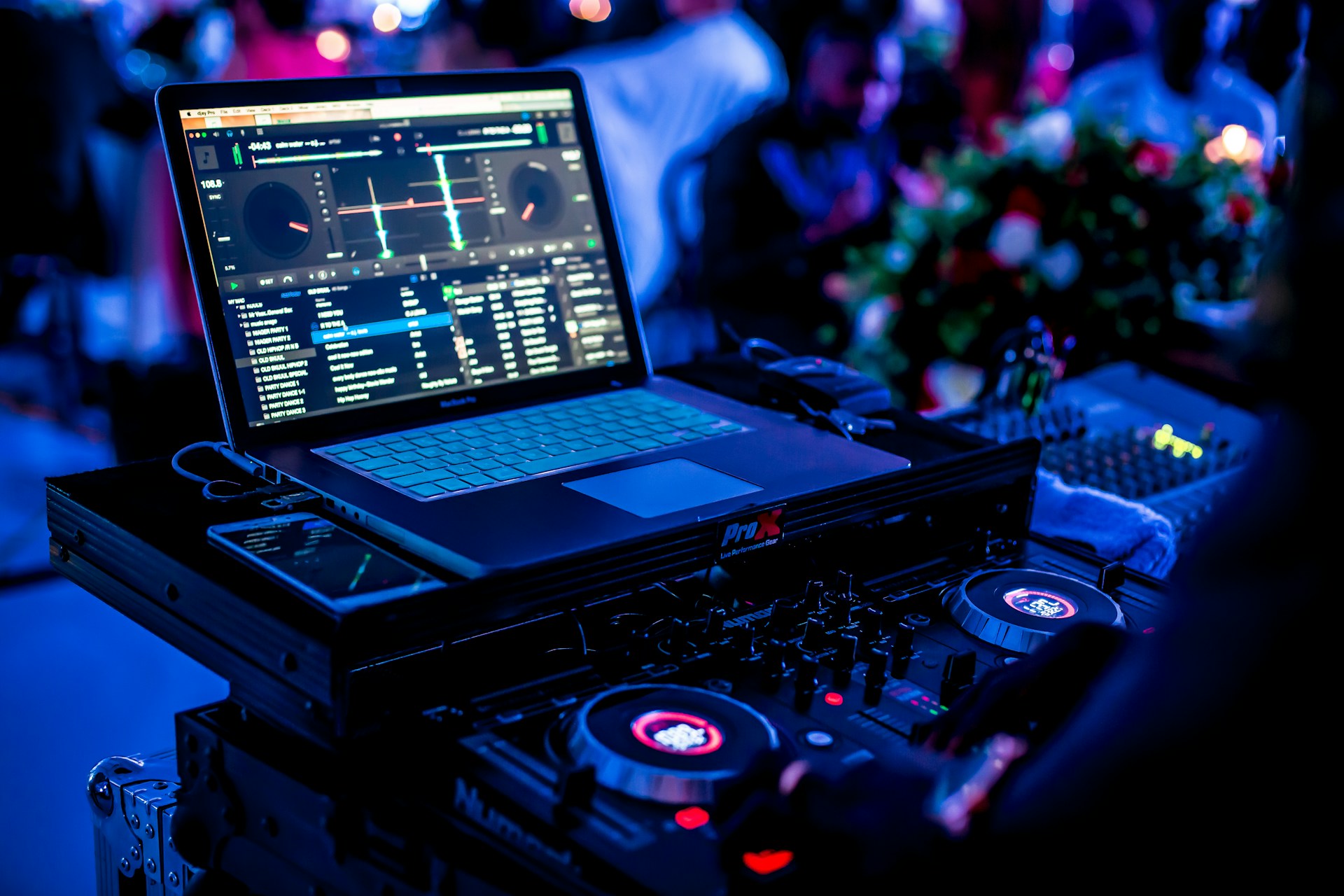
To perform EDM mixes, you’ll need a DJ controller or, for a club-ready experience, a pair of CDJs and a mixer.
Additionally, a variety of peripherals, including a pair of headphones, speakers, and the relevant cables, will also be required.
DJ Software
Once you’ve got the best DJ equipment for your budget, you’ll need to install appropriate software, such as Rekordbox for Pioneer DJ gear.
There are alternatives available, including free-to-use DJ software and options for specific laptop operating systems, such as Windows and Mac.
Where To Get EDM Music
There’s a proliferation of old and new EDM releases to explore, with many thousands of tracks from hundreds of artists.
Here’s how professionals navigate the landscape and find new music to keep their sets fresh and unique:
DJ Pools
DJ pools offer access to thousands of tracks spanning many genres for a monthly fee, making them highly cost-effective.
Find a DJ pool for your genre and budget, then use it to manage your playlists by energy levels, tempo, and style.
Digital Downloads
If you’d prefer to build a bespoke music collection of specific tracks, you can purchase these individually as digital downloads.
Online stores such as Traxsource and Juno Download cover EDM in depth, as well as Bleep and Beatport for various subgenres.
Streaming Services
If you want to dig deeper and explore new artists and subgenres, streaming services are ideal for playlist discovery and expansion.
Spotify, Apple Music, and TIDAL all host a wealth of EDM tracks, with regular new releases and information on upcoming events.
Physical Media
With popular shows like Stranger Things bringing back 80s classics, physical media like CDs and vinyl records have grown in popularity.
These formats are especially recommended when crate-digging for long-standing subgenres with roots in turntable DJing.
Learn more: How to become a DJ.
How To DJ EDM: Step-By-Step
Most EDM DJs follow the same learning path, whether they’re mixing for fun or working toward a career of professional gigs.
Here’s how to DJ EDM for beginners, covering equipment setup, library acquisition and management, and creative mixing techniques.
Step 1: Set Up Your DJ Equipment
Most beginners start their mixing journey on budget gear, with many affordable DJ controllers and software on the market.
Whether you opt for CDJs or controllers, you’ll also need speakers, headphones, and accessories like cables and USB drives.
Familiarize yourself with the setup process, then focus on exploring the equipment’s core controls and how they operate.
Step 2: Build An EDM Music Library
Your music library is arguably more important than your equipment, and great track selection consistently matters more than expensive gear.
Start by building a collection of your favorites, along with top-tier examples from your preferred music genres.
If you need inspiration, listen to the best DJ mixes from artists you admire, building a balanced collection catering to various settings.
Step 3: Organize Your DJ Library
Organization is key to performing successful mixes, especially when your confidence allows you to mix tracks on the fly.
Use your software’s tools to organize your music library based on artists, releases, genres, tempo, key, and mood.
This makes it easy to quickly hunt down optimal tracks, whether you’re responding to requests or personal whims.
Step 4: Master EDM Track Structure
On the topic of organization and how tempo, key, and mood play a role, the next step is to master the structure of EDM tracks.
Track intros and outros are invaluable for beat-matching and transitions, while breakdowns and drops provide the dramatic backbone.
You should also pay attention to common 16- and 32-bar DJ phrases, utilizing the song’s melodies and chord progressions to full effect.
Understanding how these elements interact is critical to structuring a DJ set that takes the audience on an emotional and engaging journey.
Step 5: Learn Basic Mixing Techniques
Once you’re familiar with the structure of your tracks, you can work on incorporating DJ transitions to bridge them together.
Learning how to beat-match keeps your tracks in sync, allowing for transitions ranging from EQ fades to drop swaps and loop tighteners.
Experiment with various transitions – and transition combinations – to see how they impact specific mixes to achieve the best sounding results.
Step 6: Experiment With Effects
Another common DJ mixing tip is to explore your hardware’s effects, which expand your options to inject creative flair.
More pronounced than standard DJ EQing, effects like reverb, echo, and flange can drastically alter the mood and style of your set.
Since some effects can have a marked impact on the sound, start by using them sparingly to avoid swamping the original tracks.
Step 7: Learn Harmonic Mixing
EDM often includes melodic elements that can be used when DJing by applying the technique of harmonic mixing.
This technique draws on the key compatibility between two tracks to ensure smooth transitions for vocals and other elements, like chord progressions.
You can use a DJ key chart, such as the Camelot Wheel, to compare the key of any tracks to verify compatibility for harmonic mixing.
Step 8: Control Energy & Flow
Percussion, harmonics, effects, and structure all come together to inform how each track fits into the overall energy and flow of a mix.
This is particularly relevant to open-format DJing, where energy levels can shift dramatically from one track to the next.
Controlling energy levels is essential for keeping the crowd engaged and delivering emotional impact that makes your sets memorable.
Step 9: Learn To Read The Crowd
Managing energy and flow is directly linked to the DJ’s ability to read the crowd, assessing how well each track is performing.
An aspect of the science of DJing, it involves close observation of subtle body language cues that can inform your next track selection.
From here, DJs can use their stage presence and charisma to amplify the music’s energy and keep the crowd engaged.
While crowd management takes time to master, the more you engage with the audience, the greater your confidence will become.
Step 10: Record, Review & Improve
One of the fastest ways to improve your EDM DJing is to record your sets, both for personal reflection and analysis and feedback from others.
This review will reveal mistakes you didn’t notice when performing, whether it’s a timing error, a gain staging issue, or an awkward transition.
Likewise, you can identify your strengths, noting down transitions and track choices that work well when blended in the mix.
Platforms like SoundCloud and Mixcloud make it easy to share your recordings online, gathering feedback and tracking progress over time.
Related read: The 10 best EDM DJs.
Top 5 EDM Subgenres
EDM contains many subgenres, each with its own characteristics around BPM ranges, energy profile, and mood.
Here are the top 5 EDM subgenres and how each style impacts your DJ mixing considerations:
1. House
An excellent subgenre for beginners, house music’s BPM, phrasing, and overall structure make it highly accessible for mixing.
In addition to commercial house tracks, deeper underground cuts are also available in subgenres such as deep house and tech house.
2. Techno
With the same lineage and pedigree as house music, techno is another versatile genre for those focused on club sets.
The best techno DJs understand the importance of layering grooves and atmospheric sounds to create extended mixes and long transitions.
3. Dubstep
With heavy, bone-shaking basslines and dramatic drops, dubstep requires a different approach to mixing within an EDM set.
Adjust the halftime feel of percussion and pay attention to the low end to avoid clashing, emphasizing the genre’s intensity.
4. Drum and Bass
With a generally faster tempo that requires skillful transitions, drum and bass sports rapid-fire percussion and bouncing basslines.
Growing in global popularity thanks to exposure from high-profile DJs, record labels like Hospital Records offer mentorships for emerging artists.
5. Future Bass
Blending lush melodies with bold shifts between breakdowns and drops, future bass is another subgenre designed for the dance floor.
Its tempo and rhythm can make it compatible with genres such as dubstep, while its melodic focus makes harmonic mixing important.
EDM DJing Mistakes To Avoid
Developing DJing skills requires practice, and understanding common mistakes can streamline the process to achieve results.
Here are some DJ mistakes to be mindful of when working on your core techniques:
- Overlaying basslines or vocals from two tracks simultaneously results in clashes.
- Forgetting to count phrases and blending transitions at the wrong time leads to clashes in chords and melodies.
- Over-relying on effects or using them excessively, and muddying the original track.
- Ignoring basic processes like gain staging, which leads to clipping and distortion.
- Overcrowding the music with an excessive amount of layers and removing the clarity of the individual components.
By practicing with an awareness of these potential issues, you can focus on mastering the creative aspects of DJing.
Further reading: House Vs EDM.
EDM DJing Tools & Resources
In case you’re struggling to master a mixing technique or find more information, here are some essential tools and resources:
Learning Resources
For a range of learning resources covering technical and creative techniques in a structured educational format, check out:
- DJ tutorials: With EDM’s popularity consistently rising, there’s an abundance of DJ tutorials breaking down the art form in detail.
- YouTube channels: YouTube also has a thriving DJ scene across all genres and systems, with hardware-specific tutorials, professional mixing, and performance tips.
- Online academies: Mainstream organizations like Tomorrowland offer online DJing and music production academies for those with a budget to spare.
DJ Communities
If you’re looking to network with other DJs to discover hidden gems or arrange collaborations, consider these options:
- DJ forums: For in-depth discussions and feedback, the best DJ forums provide access to the exchange of knowledge from experienced EDM DJs.
- Industry publications: If you want to stay abreast of the latest news and artists to watch, websites like DJ Mag, Mixmag, and Resident Advisor are essential bookmarks.
- Music sharing platforms: Aspiring DJs can increase their chances of getting noticed and connecting with other artists by posting mixes and original tracks on platforms like SoundCloud and Mixcloud.
Summary
Learning how to DJ EDM is about more than matching beats; it’s about understanding track structure, controlling energy, and creating memorable moments on the dance floor.
Throughout this guide, we’ve covered the equipment, music sources, library management, and mixing techniques needed to build confident and engaging EDM sets.
With consistent practice, strong track selection, and a willingness to experiment, you’ll develop the skills and style needed to stand out as an EDM DJ. Use the techniques in this guide as a foundation, then refine them to create a sound that’s uniquely your own.
Not a member ?
Join Today for Unlimited Music Downloads. Visit zipdj.com for more information.