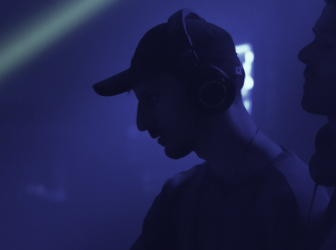
Before and After a 30-Day DJ Pool Switch

April 28, 2026

When Your Pool Slows You Down, Your Night Suffers
If prep for a 90-minute club set takes three to four hours, your DJ music pool is dragging you down. You know the drill: ten tabs open, promo emails everywhere, random MP3s from stores just to plug holes your pool should already cover.
What is really at risk is not just your sanity. It is your weekend calendar, the bar numbers, and your slot on that flyer. Talent buyers’ expect you to be first on records, not the DJ staring at the crowd while they Shazam the track you missed.
So you decide to test it for real. One hard 30-day switch to a different pool for club and electronic sets, no safety net, peak-season weekends only. The mission is simple: measure what actually changes in three places that matter on a packed floor, track quality, discovery speed, and crowd response, using ZIPDJ as the new pro standard.
If a pool does not move the needle in those three spots, it is not worth rebuilding crates, hot cues, or muscle memory. Working DJs do not have time to rewire a whole workflow for theory. We only change when it makes us sharper in the booth.
The 30 Day Weekend Stress Test Rules
We use one decision frame: the Weekend Stress Test. Four straight weekends, club rooms, open-to-close or peak hours, and afterhours. One DJ music pool only. No last-minute downloads from anywhere else. If you have to jump out, that platform just failed that use.
Before the switch, we set non-negotiables that matter to real club work:
- Deep electronic catalog, not just front page EDM
- Clean and extended mixes with solid intros and outros
- Real club remixes and edits, not just radio fluff
- Tight ID3 and genre tags that match how we sort crates
Then we lock in the workflow. New playlists, smart crates, tags, and prep are all built around ZIPDJ only. If we feel forced to dig somewhere else to save a set, we mark that as a hard red flag.
Week by week, we track what changes:
- Prep time per set
- How often we bail on a track mid-set because it does not hit
- How fast we can react when the room flips energy
- How many real “what is this?” reactions we pull from the crowd
This is not about who has more files on a server. It is about staying in the zone instead of fighting bad versions, trash metadata, and weak edits while a room full of people watches us work.
Track Quality That Survives a Real Club System
Before the switch, a lot of us live with a messy baseline. Some files slam too loud, others feel thin, masters fold on big rigs, intros are chopped weird so your hot cues do not land, and half the “club mix” labels are lying. You end up pre-listening to every track twice before you trust it in peak hour.
Over 30 days with ZIPDJ, the “after” starts to feel different. Loudness sits in a tighter pocket across labels, structure is predictable, intros and outros line up so phrasing feels natural, and extended versions actually give you space to work. Files drop into CDJ, Rekordbox, Serato, or Traktor without a night of fixing grids first.
Genre detail is where it really pays off for club and electronic rooms. You get:
- Proper tech house, not random house tags
- Progressive and melodic split correctly
- Afro, organic, and deeper sounds flagged in a way that makes sense
- Underground cuts next to obvious festival weapons
On a real system, this lets you mix longer and think more about the crowd than the gain knobs. Less gain riding. Fewer panic EQ grabs because a track came in too sharp. More confidence letting a blend ride while you plan the next three moves.
The big shift is trust. When you stop stress testing every new file five times at home before letting it touch a real dancefloor, that is a pro-standard catalog. By the second weekend on ZIPDJ, that trust starts to kick in.
Discovery Speed That Matches Real Club Deadlines
Old pool workflows feel like this: endless generic charts, wrong genres, spam promos that do not fit your room, and you skipping track after track just to find two new records that might work on Saturday. You burn hours and still walk into the club with half-baked crates.
With ZIPDJ locked in for 30 days, discovery gets sharper and faster. You work from:
- Targeted charts by sub-genre and mood
- Label following, so you never miss drops from your core imprints
- Curated playlists that match what real club and festival DJs are actually testing
- Search that lets you filter by BPM, key, energy, and era the way we actually build crates
This is where first-to-play advantage shows up. You grab promos before they bubble, load clean and club edits early, test them in smaller slots or early parts of a night, then bring them to prime time with confidence. All inside one pool, no bouncing around.
Tech stack matters too. Fast, predictable downloads. Bulk label pulls for full drops. Clean metadata that lands right inside your DJ library, so you are not spending late nights fixing tags instead of tightening transitions.
End result: you walk into the booth with more fresh records that still sound like you. That means more peaks the crowd did not hear in every other set last week, and fewer eye rolls when the same top ten loop starts again.
Crowd Reaction When Your Library Matches the Room
Before a real switch, most of us know that sinking feeling. The floor is in a perfect pocket, vocal but not cheesy, dark but not empty, and suddenly you are out of options in that lane. You either repeat a vibe that just played or bail to a safe, overplayed anthem.
When you run a full month ZIPDJ only, the room feels different. Every pocket has depth. For each mood shift, you have three or four legit follow-ups inside the same lane. Warmup grooves, peak tech, 3 a.m. warehouse feel, late-night melodic float, the catalog keeps feeding you options.
You see it in the room:
- More phones up for IDs, not just for selfies
- Staff and regulars asking about specific remixes, not just “good set”
- Fewer early walkouts when you push new music
- Talent buyers noticing that your set does not sound like every other DJ
That depth comes from catalog structure. Pro-level remixes, alternate versions, regional flavors, and B-sides all lined up so your “B crate” starts hitting like an A crate. You can read micro shifts in the crowd instead of just chasing broad waves and trends.
When you are never truly out of options, you can take more risks. You can hold tension longer, tease blends, flip energy without panic, and keep the room locked on you because everyone can feel you are not running on fumes.
Make the Switch Before Your Next Big Weekend
After a real 30-day switch, the verdict is simple. If your current setup keeps forcing you out of the platform mid-set, makes you patch gaps with random consumer downloads, or has you apologizing for sound on a big system, it is already costing you bookings, whether you see it yet or not.
ZIPDJ is built as a pro move: one DJ music pool for club-grade audio, real electronic depth, faster discovery, and a steady stream of first-to-play options that hold up on both festival rigs and dark rooms. The play is clear: pick a big weekend about a month out, flip your prep to ZIPDJ only, rebuild your core crates, and run your own Weekend Stress Test across different rooms.
Set your own bar. If by the second weekend you are not cutting prep time, leaning less on “emergency” tracks from outside sources, and seeing better crowd reaction to fresh music, stay where you are. If you are, then lock ZIPDJ in as your main pool and stop bleeding hours on side sources while your competition tightens their workflow and pushes for your slot.
Level Up Your Sets With a Professional-Grade Music Library
If you are ready to streamline your workflow and keep every set sounding fresh, explore our curated DJ music pool built for working DJs. At ZIPDJ, we focus on delivering high-quality, club-ready tracks so you spend less time searching and more time performing. Start building your next unforgettable playlist today, and if you have questions about plans or features, feel free to contact us.
Not a member ?
Join Today for Unlimited Music Downloads. Visit zipdj.com for more information.